
Health
gastroshiza: Simple Guide to This Birth Condition and How It Is Treated

When you hear a word like “gastroschisis” (sometimes written online as gastroshiza), it can sound strange and scary. This guide will explain it in clear, simple English so you can understand what it is, why it happens, and how doctors treat it.
This article is for parents, family members, and anyone who wants to learn. The tone is friendly, but the information is based on real medical knowledge and research.
What Is Gastroschisis?
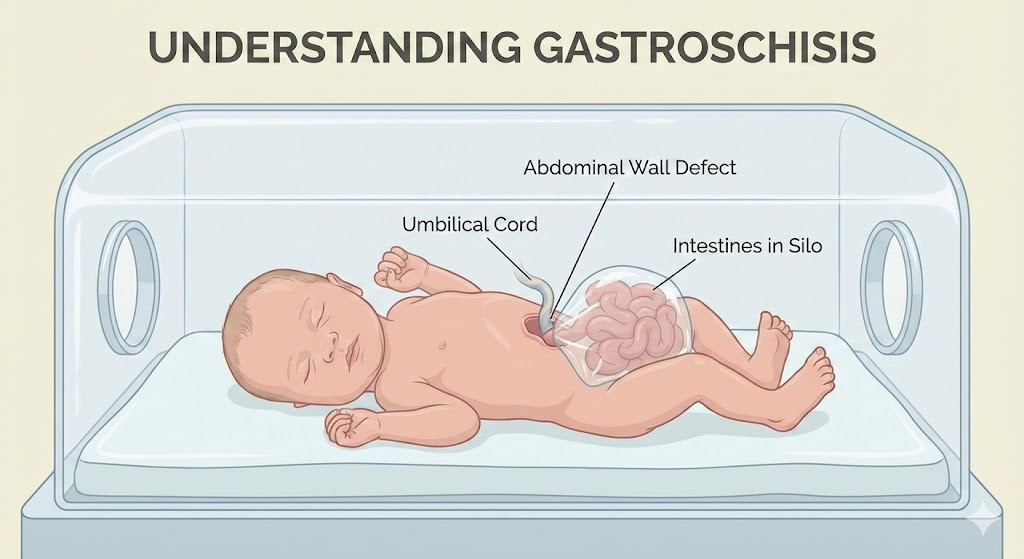
Gastroschisis is a birth defect of the belly (abdomen).
- There is a hole in the baby’s belly wall, usually next to the belly button, most often on the right side.
- Through this hole, the baby’s intestines come outside the body. Sometimes the stomach or liver can also come out.
- The organs do not have a protective sac around them. They are open to the amniotic fluid during pregnancy and to the air after birth. This can make them swollen and irritated.
Doctors see gastroschisis right away at birth because the baby’s intestines are clearly visible outside the belly.
Gastroschisis is not the parents’ fault. It happens very early in pregnancy when the baby’s belly wall is forming.
How Does Gastroschisis Happen?
The exact cause of gastroschisis is still not fully known.
Doctors know this:
- It starts early in pregnancy, when the muscles and skin of the baby’s belly do not close completely. This leaves a small opening.
- The intestines then slip out through this opening and stay outside while the baby grows.
Some risk factors make gastroschisis more likely:
- Mother is younger than 20 years old
- Smoking, alcohol, or some drug use during pregnancy
- Possible environmental factors that affect the baby during early development
In most cases, there is no family history and no clear single cause.
How Common Is Gastroschisis?
Gastroschisis is rare, but doctors are seeing it more often now than in the past.
- It affects about 4 in every 10,000 babies which is around 1 in 2,500 to 4,000 births depending on the country
- Many babies with gastroschisis are born a bit early premature
Because it needs quick surgery after birth, doctors try to plan delivery in a hospital with a neonatal intensive care unit NICU and pediatric surgeons.
How Is Gastroschisis Found?
Before Birth During Pregnancy
Gastroschisis is often found with prenatal ultrasound:
- During a routine scan often around 18 to 20 weeks of pregnancy, the doctor may see loops of bowel outside the baby’s belly
- A blood test that shows a high level of alpha fetoprotein AFP can also be a clue
If the ultrasound shows gastroschisis, the pregnancy is usually followed more closely by:
- A maternal fetal medicine specialist
- A neonatologist baby specialist
- A pediatric surgeon
They will plan the safest time and place for birth.
At Birth
If gastroschisis was not found during pregnancy, it is obvious right after delivery:
- The baby’s intestines are outside the body, near the belly button
- The medical team moves quickly to protect the organs and keep the baby warm and stable
First Hours After the Baby Is Born
The first hours are very important. The team usually:
- Places the intestines in a sterile plastic bag or special silo to keep them moist and clean
- Gives fluids through a vein IV because the baby cannot feed by mouth yet
- Keeps the baby warm and protects from infection
- Checks breathing, heart rate, and blood pressure in the NICU
The main goal is to keep the baby stable until surgery.
How Is Gastroschisis Treated?
The only real treatment is surgery. The aim is to:
- Gently put the intestines back inside the belly
- Close the hole in the belly wall
There are two main ways to do this:
1. Primary Repair One Time Surgery
If:
- The hole is small
- The intestines are not too swollen
- The baby’s belly has enough space inside
Then the surgeon may be able to:
- Put all the intestines back in during one operation
- Close the belly wall right away
This is called primary repair.
2. Staged Repair Using a Silo
If:
- Many organs are outside
- The intestines are very swollen or thick
- The belly is too small to safely hold everything at once
Then doctors use a staged repair:
- The intestines are placed in a soft plastic bag called a silo, which stands above the baby’s belly
- Over several days, the surgeons and NICU team slowly tighten the silo, so the intestines move back inside the belly a little each day
- When all the organs are back inside, the surgeon closes the hole
Life in the NICU After Surgery
After surgery, the baby usually stays in the NICU for some time. The length of stay can be weeks or even months, depending on how the intestines work.
During this time, the team:
- Gives IV nutrition also called parenteral nutrition while the bowel rests and heals
- Slowly starts milk feeds breast milk or formula through a tube when the intestines are ready
- Watches for signs of
- Infection
- Trouble digesting food
- Blockages in the bowel
Parents can often touch, hold, and talk to their baby when safe. Skin to skin contact kangaroo care is encouraged when possible.
Possible Complications
Many babies with gastroschisis do very well. But some may have complications, especially if the condition is complex like when the bowel is twisted or blocked.
Possible problems include:
- Slow bowel movement It can take a long time before the intestines work well, so tube feeding and IV nutrition may be needed
- Intestinal atresia A part of the intestine may be missing or blocked and needs extra surgery
- Short bowel syndrome If a large part of the intestine is damaged and removed, the child may have long term problems absorbing food
- Infections Because of surgeries and IV lines, there is a higher risk of infection
Even with these risks, survival rates in good hospitals are very high, often above 90 percent.
Long Term Outlook for Children
The good news is that many children with gastroschisis:
- Grow up to live normal lives
- Can go to school, play sports, and eat normally
However, some may need:
- Follow up with gastroenterologists digestive system doctors
- Help from dietitians if weight gain is slow
- Extra checking of growth and development in early years
Children with complex gastroschisis or short bowel syndrome may need longer follow up, special diets, or medicines.
Emotional Support for Parents
Learning that your baby has gastroschisis can feel shocking, sad, and confusing. These feelings are normal.
Helpful steps:
- Ask many questions. The medical team is used to explaining this condition to parents
- Write things down or ask someone to take notes during talks with doctors
- Reach out to support groups for parents of children with birth defects or NICU babies
- Take care of your own health too. Sleep, food, and mental health are important so you can care for your baby
You are not alone. Many families have walked this road and found hope.
Frequently Asked Questions FAQ
1. Is gastroshiza the same as gastroschisis?
Yes. Gastroshiza is a misspelling or non medical spelling that some websites use. The correct medical name is gastroschisis.
2. Did I do something wrong to cause gastroschisis?
In almost all cases, no. The exact cause is unknown. Some things like very young maternal age, smoking, or alcohol can increase the risk but many mothers with healthy habits also have babies with gastroschisis.
3. Can gastroschisis be seen before the baby is born?
Yes. In many cases, doctors see it on a routine ultrasound, often around 18 to 20 weeks of pregnancy, when they see bowel outside the baby’s belly.
4. How serious is gastroschisis?
Gastroschisis is serious because vital organs are outside the body and surgery is needed. But with modern care and surgery, most babies survive and do well.
5. Will my baby need more than one surgery?
Sometimes yes. If the intestines are very swollen or many organs are out, doctors may use a staged repair with a silo and several steps. Some babies also need later surgeries for bowel problems like blockages.
6. Can my baby eat normally after recovery?
Many children with simple gastroschisis later eat a normal diet. But at first, feeding is slow and careful. Some babies with complex gastroschisis or short bowel need special diets or long term support.
7. How long will my baby stay in the hospital?
The hospital stay is often several weeks and sometimes months. It depends on how quickly the intestines start working, how soon the baby can feed by mouth, and whether there are complications.
8. Will my next baby also have gastroschisis?
The chance that a future baby will also have gastroschisis is low. There is some small increased risk compared with the general population but most families have healthy babies next time.
9. Is a cesarean C section always needed?
Not always. There is no strong proof that C section is better than vaginal birth just because of gastroschisis. The type of delivery usually depends on other reasons related to the mother or baby.
10. Where can I find good information and support?
Trusted sources include
Major children’s hospitals
Parent support groups for birth defects or NICU families
Click for more amazing info. News MM

In today’s fast-paced world, businesses and organizations are always on the lookout for innovative systems that can streamline operations, boost performance, and improve overall efficiency. One such system that has been gaining traction is EO PIS. But what exactly is EO PIS, and how can it benefit organizations? In this article, we will explore everything you need to know about EO PIS its meaning, applications, benefits, and frequently asked questions.
What is EO PIS?
EO PIS stands for Executive Operations Performance Indicator System, a term widely used in the context of modern business and organizational management. It is a framework designed to measure, track, and enhance the performance of executives and overall business operations. EO PIS collects and analyzes data from various sources within an organization to provide insights into key performance indicators (KPIs), helping decision-makers identify areas for improvement and track their progress toward business goals.
The goal of EO PIS is to facilitate more informed decision-making and optimize operations, ultimately driving better results for the organization.
The Structure of EO PIS
EO PIS generally consists of several components:
- Key Performance Indicators (KPIs): These are measurable values that indicate how effectively an organization is achieving its objectives.
- Real-Time Data: EO PIS relies on up-to-date data to track performance and allow for quick decision-making.
- Dashboards and Reports: These provide visual representations of the data, helping stakeholders interpret and act on the information easily.
- Actionable Insights: The system analyzes the data to provide recommendations for improvement, which helps executives and managers take targeted actions.
Applications of EO PIS
EO PIS is versatile and can be applied across various industries. Its primary applications include improving executive performance, streamlining business operations, enhancing strategic decision-making, and optimizing resource allocation. Let’s take a closer look at the specific areas where EO PIS can make a significant impact.
1. Executive Performance Management

EO PIS helps track the performance of executives and leaders by aligning their activities with the organization’s strategic goals. By analyzing key metrics such as revenue growth, cost reduction, and operational efficiency, EO PIS ensures that leaders stay focused on what matters most.
2. Operational Efficiency
By integrating data from various departments, EO PIS helps identify inefficiencies in day-to-day operations. This information allows organizations to optimize their workflows and reduce waste, resulting in lower costs and improved productivity.
3. Strategic Decision-Making
The real-time data provided by EO PIS supports better strategic decision-making. Executives can use the system to quickly assess market conditions, customer demands, and internal performance, enabling them to make data-driven decisions that drive business success.
4. Resource Allocation
With its detailed insights into operational performance, EO PIS enables organizations to allocate resources more effectively. By identifying high-performing areas and underperforming ones, it helps businesses direct their resources to where they are most needed, ensuring maximum impact.
5. Compliance and Risk Management
EO PIS also plays a crucial role in ensuring that organizations comply with relevant regulations. It helps track key compliance metrics, making it easier for companies to meet industry standards and avoid legal issues. Additionally, it identifies potential risks early, allowing for proactive mitigation strategies.
Benefits of Implementing EO PIS
The implementation of EO PIS can have far-reaching benefits for organizations of all sizes. Below, we explore the top advantages that come with using this powerful system.
1. Enhanced Decision-Making
By providing executives with actionable insights based on real-time data, EO PIS empowers them to make well-informed decisions. This is particularly beneficial in fast-moving industries where swift, data-driven decision-making is key to staying ahead of competitors.
2. Improved Accountability
EO PIS helps establish clear accountability within an organization by tracking the performance of executives and departments. This clarity ensures that everyone is aligned with the organization’s goals and is held responsible for their contributions.
3. Increased Productivity
The system’s ability to identify inefficiencies and areas for improvement can help organizations optimize their processes, leading to increased productivity. By eliminating bottlenecks and streamlining workflows, businesses can achieve more with fewer resources.
4. Better Resource Management
EO PIS provides a clear view of where resources are being utilized most effectively, helping organizations make smarter decisions about resource allocation. Whether it’s human resources, financial capital, or time, EO PIS ensures that resources are used efficiently to maximize ROI.
5. Cost Savings
By improving operational efficiency and reducing waste, EO PIS can significantly lower costs. The system also helps identify areas where cost reductions can be made without compromising the quality of products or services, contributing to better profitability.
6. Improved Strategic Alignment
EO PIS ensures that every part of the organization is working toward the same strategic goals. This alignment improves collaboration, minimizes confusion, and drives greater success in achieving long-term objectives.
7. Data-Driven Culture
Implementing EO PIS fosters a data-driven culture within the organization. Employees and executives alike are encouraged to base decisions on data rather than intuition, leading to more objective and reliable outcomes.
Conclusion
EO PIS is a game-changer for organizations looking to improve their performance, make better decisions, and optimize operations. By offering real-time data and actionable insights, EO PIS empowers executives to take targeted actions that lead to improved productivity, cost savings, and strategic alignment. Whether you are a small business or a large enterprise, the power of EO PIS can help you unlock new levels of efficiency and success.
Frequently Asked Questions (FAQs) About EO PIS
1. What is EO PIS used for?
EO PIS is used to track and measure executive performance, optimize business operations, and improve strategic decision-making through real-time data and actionable insights.
2. How does EO PIS help in decision-making?
EO PIS helps decision-makers by providing real-time data, visual dashboards, and detailed reports that highlight performance trends, challenges, and opportunities, allowing for informed decision-making.
3. Is EO PIS suitable for all types of businesses?
Yes, EO PIS can be adapted to businesses of all sizes and industries. Whether you’re in manufacturing, retail, finance, or technology, EO PIS can help improve performance and operational efficiency.
4. Can EO PIS improve employee productivity?
Yes, by identifying inefficiencies in workflows and providing insights into resource allocation, EO PIS helps businesses optimize processes, leading to better employee productivity.
5. What are the key components of EO PIS?
The key components of EO PIS include KPIs (Key Performance Indicators), real-time data, dashboards, and actionable insights that guide business decision-making.
6. How can EO PIS impact compliance and risk management?
EO PIS tracks compliance metrics and identifies risks early, helping organizations stay compliant with regulations and proactively manage potential threats.
7. Does EO PIS require any special training to use?
While EO PIS is user-friendly, some training may be required to fully understand how to interpret the data and use the system effectively for decision-making.
8. What industries can benefit from EO PIS?
EO PIS is beneficial in industries such as healthcare, finance, manufacturing, retail, and technology, where real-time performance tracking and strategic decision-making are essential.
9. Is EO PIS cost-effective for small businesses?
EO PIS can be tailored to suit businesses of all sizes. Many systems offer scalable solutions, making it accessible to small businesses while offering powerful insights at an affordable price.
10. What is the difference between EO PIS and traditional performance management systems?
Unlike traditional systems, which may rely on outdated or manual data collection, EO PIS uses real-time data to offer more accurate insights. It also integrates with other business processes for comprehensive performance management.
Click for more amazing info. News MM

In today’s fast-moving world, where wellness trends shift overnight and health misinformation spreads rapidly, having a trustworthy source for health content is crucial. Wheon.com Health News has steadily emerged as a reliable platform for evidence-based, easy-to-understand, and up-to-date health content. Whether you’re a fitness enthusiast, a busy parent, or simply someone who wants to stay informed, Wheon.com delivers a broad range of wellness content tailored for modern readers.
What Is Wheon.com Health News?
Wheon.com Health News is a digital health platform designed to make accurate wellness information accessible and easy to understand. Unlike flashy clickbait blogs or questionable online forums, Wheon.com prioritizes content backed by science. Its editorial process involves medical professionals and health experts who ensure that each article reflects the most recent findings and practical advice.
Whether you’re curious about a specific condition, seeking general lifestyle guidance, or trying to understand recent health trends, Wheon.com covers it all—without confusing jargon or fear-mongering.
A Wide Range of Health Topics
One of the standout features of Wheon.com Health News is its broad content coverage. The platform isn’t limited to one niche but instead provides in-depth information across a variety of categories, including:
1. Disease Prevention and Chronic Illness
Readers can find valuable insights on managing or preventing conditions like diabetes, heart disease, and high blood pressure. Articles cover symptoms, prevention tips, and treatment options based on guidelines from major health organizations.
2. Mental Health Awareness
Mental wellness is front and center on Wheon.com. Topics such as anxiety, stress management, depression, and emotional health are approached with empathy and clarity. Real-life tips, coping strategies, and expert interviews help remove the stigma around mental health.
3. Nutrition and Diet Tips
From meal planning to identifying common nutritional deficiencies, Wheon.com provides practical guidance for all ages. The site often features new diet trends—but always with a critical eye and a scientific foundation.
4. Fitness and Movement
Whether you’re a seasoned gym-goer or a beginner looking to start walking more, the fitness section is filled with motivational and science-backed content. There are workout guides, posture tips, and even exercise modifications for different age groups.
5. Women’s and Men’s Health
Gender-specific health issues, from reproductive health to hormonal changes, are covered thoughtfully. Topics include menopause, testosterone levels, fertility, and sexual health—all presented in a clear and respectful manner.
6. Parenting and Children’s Health
Wheon.com is also a go-to resource for parents. Information on childhood nutrition, vaccines, developmental milestones, and emotional well-being offers reassurance for families navigating health decisions.
Expert-Reviewed and Evidence-Based
Trustworthiness is one of the main reasons readers flock to Wheon.com Health News. All content is reviewed by professionals, often cross-referenced with peer-reviewed medical journals, WHO updates, and CDC guidelines.
Articles typically include citations or references to original studies and official recommendations. The goal is not only to inform but to empower readers with actionable knowledge they can trust.
Interactive Tools and Health Resources
Beyond informative articles, Wheon.com offers a growing library of health tools, making it more than just a news site.
Key Features:
- Symptom Checker: A simple guide to help users evaluate common symptoms.
- BMI and Calorie Calculators: Easy-to-use widgets that offer insights into personal health metrics.
- Diet & Fitness Trackers: For users who want to monitor their wellness journey over time.
These features help turn passive reading into proactive health management.
Real Voices, Real Stories
Another way Wheon.com Health News connects with readers is through personal stories and expert interviews. Health journeys, professional insights, and patient experiences bring humanity to the content. It’s not just about medical terms—it’s about people living healthier lives, one choice at a time.
Global and Local Focus
While Wheon.com provides global health news, it also acknowledges local and regional health challenges. Articles are tailored to reflect diverse healthcare systems, environmental conditions, and regional outbreaks. This dual perspective makes the platform useful whether you’re in the U.S., Pakistan, the UK, or anywhere else.
Looking Ahead: AI and Customization
Wheon.com is preparing to roll out AI-powered features, including personalized health advice and real-time suggestions based on user inputs. From suggesting workouts based on your fitness level to creating daily health goals, these tools will make the platform even more user-centric in the coming years.
Final Thoughts
In an online world full of misinformation and health fads, Wheon.com Health News is a breath of fresh air. It blends scientific accuracy with everyday practicality, making wellness something anyone can understand and act upon.
From mental health to meal prep, Wheon.com brings trustworthy health information straight to your screen—and it’s only getting better with time.
Frequently Asked Questions (FAQs)
1. Is Wheon.com Health News reliable?
Yes, the platform uses information from medical journals, professional health organizations, and expert reviewers to ensure accuracy.
2. Who writes the content on Wheon.com?
Articles are written and reviewed by qualified health writers, medical experts, and nutritionists.
3. Does the site only cover physical health topics?
No, Wheon.com also provides in-depth content on mental health, emotional well-being, and stress management.
4. Is the site suitable for beginners in health topics?
Absolutely. Articles are written in clear, simple language that avoids complicated jargon.
5. Does Wheon.com promote any specific products or diets?
No. The platform remains neutral and objective, only presenting scientifically supported health advice.
6. Can I use Wheon.com for personalized health advice?
While it offers general advice and tools, personal health decisions should still be discussed with a doctor.
7. Is Wheon.com free to use?
Yes, all content and tools are currently free to access without a subscription.
8. Are there mobile tools or apps available?
Currently, the website is mobile-friendly, and AI-based tools for mobile use are under development.
9. How often is new content added?
New health articles and news updates are added regularly to keep up with changing trends and research.
10. Does the site offer community interaction?
Yes, forums and comment sections allow readers to share their experiences and connect with others.
Click for more amazing info. News MM
Health
What Is Hizzaboloufazic? Meaning, Origins, and Why Everyone’s Talking About It “about hizzaboloufazic”

In today’s world of viral trends and strange internet discoveries, few words have sparked as much curiosity and confusion as Hizzaboloufazic. It sounds mysterious, feels oddly philosophical, and seems to pop up in different corners of the internet—from memes and wellness blogs to TikTok videos and Reddit threads.
But what exactly is Hizzaboloufazic? Is it a spiritual practice, an internet joke, or something in between? In this article, we’ll explore the fascinating—and often hilarious—journey of this viral term, where it came from, how people interpret it, and why it’s become such a topic of discussion.
To put it simply: nobody really knows. And that’s part of the fun.
“Hizzaboloufazic” is a made-up term with no official definition. It first surfaced online in 2024 and has since evolved into a kind of cultural Rorschach test—people see in it what they want. Some think it’s a satirical jab at overly complex jargon in wellness or tech circles, while others believe it could be a symbolic philosophy or a placeholder for abstract concepts.
At its core, Hizzaboloufazic is open to interpretation, and that’s what makes it so engaging.
Popular Interpretations of Hizzaboloufazic
Here are the three most common ways people are trying to make sense of it:
1. A Meme or Internet Satire
Many believe Hizzaboloufazic is nothing more than a clever internet meme. It’s often used in a joking way—kind of like saying “quantum chakra realignment” or other nonsensical buzzwords. It pokes fun at how serious and complicated people try to sound online.
2. A Holistic Practice
On some wellness and lifestyle blogs, you’ll find people calling it a type of healing technique. This version of Hizzaboloufazic includes breathwork, energy balancing, or even meditation. However, there is no medical or scientific basis to back up these claims.
3. A Philosophy of Uncertainty
Some more thoughtful interpretations suggest it’s a new-age philosophy meant to help people embrace confusion and let go of needing exact answers. It reflects modern existentialist ideas—accepting life’s gray areas rather than forcing black-and-white thinking.
Why Is Hizzaboloufazic Going Viral?
Here’s why the term has exploded across the internet:
- It’s weird and fun to say. Its quirky sound makes it perfect meme material.
- People love a mystery. Anything unknown becomes instantly more shareable.
- It feels deep… even if it isn’t. The name gives off the impression of wisdom, making people pause and wonder.
- Content creators ran with it. TikTokers, bloggers, and podcasters love using it as a conversation starter or even a punchline.
It’s like the internet’s version of an inside joke.
Should You Take Hizzaboloufazic Seriously?
That depends on what you’re looking for.
If you’re curious about the strange and silly side of internet culture, or you enjoy philosophical riddles and playing with abstract ideas—Hizzaboloufazic might actually be worth your time.
But if you’re hoping to uncover a serious wellness routine or life-changing philosophy, you might want to dig elsewhere. Always verify sources before trying out any health-related practices being passed around online.
Remember: just because something sounds wise doesn’t mean it is.
Final Thoughts
In a world where we often chase concrete definitions and absolute truths, Hizzaboloufazic reminds us that sometimes, it’s okay not to have all the answers. Whether you see it as a joke, a metaphor, or a spark of modern wisdom, it serves a purpose—getting us to think, laugh, and talk.
So next time someone asks what it means, just smile and say:
“It’s whatever you want it to be.”
Because that’s the beauty of Hizzaboloufazic.
10 Frequently Asked Questions
1. What is Hizzaboloufazic?
It’s an ambiguous internet term with no single definition—used in memes, blogs, and philosophical discussions.
2. Is Hizzaboloufazic real or made-up?
It’s made-up but widely used online as both a joke and a creative expression.
3. Where did Hizzaboloufazic come from?
Likely from Reddit or TikTok; first seen in early 2024.
4. Is Hizzaboloufazic a wellness practice?
Some say yes, but there’s no scientific backing or official method.
5. Can I use Hizzaboloufazic in conversation?
Absolutely! It’s often used humorously or metaphorically.
6. Does it have any spiritual meaning?
Only in a symbolic sense—it depends on your interpretation.
7. Is it safe to try “Hizzaboloufazic therapy”?
Caution is advised; no verified health benefits or real therapy model exists.
8. Why is it trending now?
Its mystery and meme-worthy quality have helped it go viral.
9. Are there books or research about it?
Not yet—most info comes from blogs and user-generated content.
10. Will Hizzaboloufazic still be popular next year?
Hard to say—like most trends, it could fade or evolve into something new.
Click for more amazing info. News MM

Why Fintech Lenders Are Rapidly Adopting AI Credit Scoring & Automated Underwriting

Wire Rope Grease for Cranes and Winches Across the United States

The Rise of AI-Powered Smartphones and Their Applications

10 High-Growth UK Web Development Companies Dominating 2026

What Is imamia student organization? A Simple Guide for Everyone

How Paintball Was First Invented: A Simple Story for Everyone

gastroshiza: Simple Guide to This Birth Condition and How It Is Treated

Black Onyx: Simple Guide to Its Meaning, Power, and Everyday Uses

Earn 1$ per claim highest paying faucet no minimum withdraw 2025

FintechZoom.com Stock Market: Simple Guide to Smarter Investing

India Rose Brittenham: All You Need to Know About Heather Thomas’ Daughter

Margot Rooker: All You Need to Know About Michael Rooker’s Wife

Robert Noah? All You Need to Know About Trevor Noah’s Father

Nadia Farmiga? All You Need to Know About Taissa Farmiga’s Sister

Jackie Witte? All You Need to Know About Paul Newman’s First Wife

Verna Aho? All You Need to Know About Lauri Markkanen’s Wife

Who is the Father of Jay-Z? Biography of Adnis Reeves

Abigail S. Koppel? All You Need to Know About Leslie Wexner’s Wife

Who Is Itchko Ezratti’s Wife? Anna Ezratti Supporting Her Husband’s Legacy

Cheryl Pistono? All You Need to Know About Kareem Abdul-Jabbar’s Ex-Girlfriend
India Rose Brittenham: All You Need to Know About Heather Thomas’ Daughter
Margot Rooker: All You Need to Know About Michael Rooker’s Wife
Robert Noah? All You Need to Know About Trevor Noah’s Father
Nadia Farmiga? All You Need to Know About Taissa Farmiga’s Sister
Jackie Witte? All You Need to Know About Paul Newman’s First Wife
Verna Aho? All You Need to Know About Lauri Markkanen’s Wife
Who is the Father of Jay-Z? Biography of Adnis Reeves
Abigail S. Koppel? All You Need to Know About Leslie Wexner’s Wife
Who Is Itchko Ezratti’s Wife? Anna Ezratti Supporting Her Husband’s Legacy
Cheryl Pistono? All You Need to Know About Kareem Abdul-Jabbar’s Ex-Girlfriend
-
 Celebrity11 months ago
India Rose Brittenham: All You Need to Know About Heather Thomas’ Daughter
-
 Celebrity11 months ago
Margot Rooker: All You Need to Know About Michael Rooker’s Wife
-
 Celebrity11 months ago
Robert Noah? All You Need to Know About Trevor Noah’s Father
-
 Celebrity11 months ago
Nadia Farmiga? All You Need to Know About Taissa Farmiga’s Sister
-
 Celebrity11 months ago
Jackie Witte? All You Need to Know About Paul Newman’s First Wife
-
 Celebrity11 months ago
Verna Aho? All You Need to Know About Lauri Markkanen’s Wife
-
 Celebrity11 months ago
Who is the Father of Jay-Z? Biography of Adnis Reeves
-
 Celebrity11 months ago
Abigail S. Koppel? All You Need to Know About Leslie Wexner’s Wife